Slovenia is often called Europe's "hidden gem," but for the savvy expat, it is no longer hidden—it is the target. Nestled between the Alps and the Adriatic, bordering Italy, Austria, Hungary, and Croatia, this small nation offers a quality of life that rivals Switzerland at a fraction of the cost. Whether you are a US citizen escaping the hustle, a UK national navigating post-Brexit realities, or a digital nomad seeking high-speed internet in an alpine cottage, Slovenia offers a blend of safety, stability, and stunning natural beauty that is increasingly rare.
However, moving here is not a simple administrative formality. Slovenia has strict bureaucracy, specific income requirements, and a unique language. This guide cuts through the noise to provide a definitive roadmap for your relocation, tailored to your specific background and motivation.
🌍 Nationality-Specific Critical Information
🇺🇸 For US Citizens
- FATCA applies: Slovenian banks (like NLB or SKB) will report your accounts to the IRS. You must file US taxes annually on worldwide income.
- Schengen Rule: You are limited to 90 days in any 180-day period without a residence permit.
- Driving: You can use your US license for one year, but must exchange it (which requires a practical exam) before that year expires.
<div>
  <h4 class="font-bold text-blue-800 mb-2">🇬🇧 For UK & Irish Citizens</h4>
  <ul class="list-disc pl-5 space-y-1 text-gray-700 text-sm">
    <li><strong>Post-Brexit:</strong> UK citizens are now Third Country Nationals. You strictly need a visa for stays over 90 days.</li>
    <li><strong>Healthcare:</strong> The GHIC card covers temporary stays, but residents must register for the mandatory ZZZS insurance.</li>
    <li><strong>Pension:</strong> UK state pensions are indexed (up-rated) annually in Slovenia.</li>
  </ul>
</div>

<div>
  <h4 class="font-bold text-blue-800 mb-2">🇮🇳 For Indian & South Asian Citizens</h4>
  <ul class="list-disc pl-5 space-y-1 text-gray-700 text-sm">
    <li><strong>Visa Processing:</strong> Processing times can be longer (3-6 months). Apply well in advance at the Embassy in New Delhi.</li>
    <li><strong>TRP Requirement:</strong> You must have a Temporary Residence Permit (TRP) before entering for long stays; you cannot switch from a tourist visa inside Slovenia easily.</li>
    <li><strong>Community:</strong> Growing tech communities in Ljubljana and Maribor.</li>
  </ul>
</div>

<div>
  <h4 class="font-bold text-blue-800 mb-2">🇪🇺 For EU/EEA Citizens</h4>
  <ul class="list-disc pl-5 space-y-1 text-gray-700 text-sm">
    <li><strong>Freedom of Movement:</strong> You do not need a visa. You simply register your residence at the administrative unit (<em>Upravna Enota</em>) within 90 days.</li>
    <li><strong>Employment:</strong> You can start working immediately without a work permit.</li>
  </ul>
</div>
1. Corporate Relocation to Slovenia
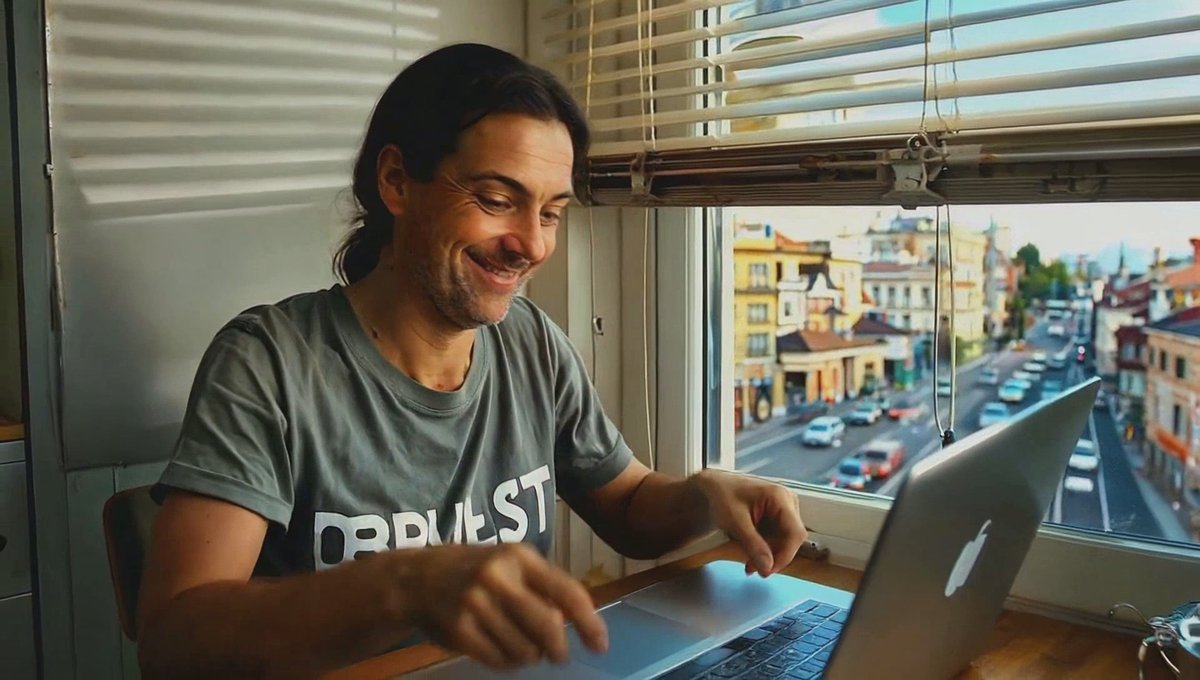
"The work-life balance in Slovenia is not a myth. My team in Ljubljana is productive, but at 4:00 PM, the office clears out because people are hiking Smarna Gora or picking up kids. It took me a while to adjust from the London grind, but now I wouldn't trade it."
— James T., Marketing Director, relocated from UK in 2022
For corporate transfers and business expansion, Slovenia serves as an ideal bridge between the Balkans and Western Europe. It offers the infrastructure of Austria with a more competitive cost base. The corporate environment is formal but relationship-driven. English is widely spoken in business circles, particularly in the IT, pharmaceutical, and automotive sectors.
Visa Options for Corporate Transfers
Non-EU citizens generally require a Single Residence and Work Permit. This "single permit" procedure is streamlined, meaning you apply for both residency and work authorization in one go. According to official government data, your employer must prove they actively searched for a candidate in the local market (labor market test) unless the specific role is exempt (e.g., highly skilled shortage occupations).
For highly skilled professionals, the EU Blue Card is available. To qualify, you must have a binding job offer for at least one year and a salary of at least 1.5 times the average gross annual salary in Slovenia (approx. €33,000 - €43,000 threshold). The Blue Card offers faster processing and easier family reunification rights.
Corporate Tax & Structure
Slovenia is attractive for business due to its [19% corporate tax rate](https://www.fu.gov.si/en/taxes_and_other_duties/areas_of_work/corporate_income_tax/), which is one of the more competitive rates in the region (compared to 25% in Austria or 24% in Italy). Dividends paid to individuals are taxed at 25%. For US companies, Slovenia has a tax treaty to avoid double taxation, though the specific withholding rates vary.
📍 For Employers:
Social security contributions are high. The employer pays 16.1% on top of the gross salary, while the employee pays 22.1% deducted from the gross salary. This funds the excellent public healthcare and pension systems.
2. Trust: Safety, Stability & Asset Protection

"I moved here from South Africa specifically for the safety. I can walk my dog at 2 AM in the center of Ljubljana and feel completely at ease. The legal system is slow, yes, but it works. You don't worry about arbitrary seizure of assets here."
— Sarah V., relocated from Cape Town in 2021
For high-net-worth individuals and families, the primary motivation for choosing Slovenia is often security. Slovenia consistently ranks among the top 10 safest countries in the world on the [Global Peace Index](https://www.visionofhumanity.org/maps/#/). The crime rate is exceptionally low, and violent crime is rare.
Legal Framework & Property Rights
Slovenia operates under a civil law system based on the Austrian/German model. Property rights are constitutionally protected and enforced, though the judicial system can be slow. For non-EU citizens, buying property involves a reciprocity principle.
- US & UK Citizens: Generally can purchase property due to reciprocal agreements, but must obtain a "decision of reciprocity" from the Ministry of Justice.
- EU Citizens: Can purchase freely without restrictions.
- Other Third-Country Nationals: Often cannot buy property directly as individuals. The standard workaround is to register a Slovenian company (d.o.o.) and purchase the property through the corporate entity.
3. Wealth Management & Investment

"Low entry threshold with a minimum investment of €50,000... After 5 years of temporary residence on a business basis you have an opportunity to apply for permanent residence."
— Sibiz d.o.o., Business & Relocation Consultancy
While Slovenia does not have a branded "Golden Visa" like Portugal or Greece, it offers a de facto investment residency route through Business Investment. This is a popular path for wealth holders from the Middle East, Asia, and non-EU Europe.
The "Business Investment" Pathway
To qualify for residency through business, a foreigner typically opens a Limited Liability Company (d.o.o.). To be eligible for work and residence permits through this company, one of three conditions must be met:
- Investment: Invest at least €50,000 in fixed assets (property, equipment, vehicle) within the first 6 months.
- Employment: Employ an EU citizen or Slovenian national for at least 6 months.
- Turnover: Show a monthly turnover of €10,000 for 6 consecutive months.
The €50,000 investment route is the most common for wealth clients. It allows you to buy a property (commercial or residential, if classified correctly) and gain residency.
Banking & Capital Controls
Opening a bank account as a non-resident is difficult but possible. Major banks include NLB, Nova KBM, and SKB (part of OTP Group). Slovenia is part of the SEPA zone. For large transfers, expect strict Anti-Money Laundering (AML) checks. You will need to prove the source of funds (SOF) meticulously.
4. Retirement in Slovenia

"We looked at Italy and Croatia, but the healthcare in Slovenia won us over. It's clean, modern, and accessible. Plus, our pension goes much further here. A nice lunch with wine is €15."
— Robert & Linda, Retired couple from Florida, US
Slovenia is an increasingly popular retirement destination due to its high-quality healthcare and four-season climate. However, there is no specific "Retirement Visa" in Slovenian law. Retirees from non-EU countries generally apply for a residence permit based on "Other Justified Reasons" (often proven via property ownership or study) or must navigate the system carefully. *Note: Strictly speaking, passive income alone is sometimes not enough for the initial permit without a specific purpose like study or family reunification, so many retirees initially enroll in language courses or buy property to establish a "justified reason."*
Healthcare for Retirees
Residents must pay into the ZZZS (Health Insurance Institute of Slovenia). For those not employed, you may need to self-pay or prove private coverage initially. The system is high quality; Slovenia ranks well in the [Euro Health Consumer Index](https://healthpowerhouse.com/publications/).
- For UK Retirees: If you have an S1 form, you can register for state healthcare paid for by the UK.
- For US Retirees: Medicare does not cover you. You must purchase private international health insurance (e.g., Cigna Global, Allianz) for the visa application, costing roughly $200–$500/month depending on age/conditions.
5. Digital Nomads & Remote Work
"The internet in Ljubljana is blazing fast (fiber everywhere), and the cafe culture is perfect for working. But be warned: the bureaucracy for visas is not 'nomad-friendly' yet. I had to register as a sole proprietor to stay legal."
— Alex C., Software Developer from Canada
Slovenia offers a high-speed fiber network even in rural areas, making it a technical paradise for remote workers. However, legally, it is in a transition phase. While government discussions about a dedicated "Digital Nomad Visa" have occurred, as of 2025, it is not fully operational or widely accessible compared to Croatia's established program.
The "Self-Employed" Route
Most long-term nomads opt to register as a Sole Proprietor (Samostojni podjetnik or s.p.).
- Process: You register the business, which allows you to apply for a single residence and work permit.
- Normed Expenses (Normirani s.p.): This is a massive tax benefit. If your revenue is under €50,000 (or €100,000 with one employee), you are taxed on only 20% of your income at a 20% rate (effectively ~4% tax), plus mandatory social contributions (approx. €450–€500/month).
- Warning: You generally need to be a resident for 1 year before you can open an s.p. as a third-country national, UNLESS you go through the "Business Investment" route (d.o.o.) mentioned in the Wealth section.
6. Lifestyle & Culture
"I am a bit emotional as I write this... I really loved the vibe of the city and everyone we interacted with. Physical beauty is everywhere."
— Reddit User (u/marianneouioui), Traveler/Expat
Life in Slovenia moves at a human pace. It is defined by the "coffee culture"—Slovenians spend hours in cafes socializing. A popular local concept (often joked about) is the "15-15-15 rule": 15 minutes to order, 15 minutes to drink, 15 minutes to pay. It’s not about inefficiency; it’s about enjoying the moment.
Outdoor Living
Slovenians are fiercely active. Hiking is the national pastime. On weekends, the capital Ljubljana empties as locals head to the Julian Alps, Lake Bled, or the Soča Valley. The country is one of the greenest in the world, with over [60% forest coverage](https://www.slovenia.info/en).
For Indian/Asian Expats: You will find a small but welcoming community. While extensive spice markets are rare outside Ljubljana, the capital has several Asian grocery stores (e.g., Asia Supermarket on BTC City). Cricket is played recreationally in limited circles, but football and basketball (Luka Dončić is a national hero) rule here.
7. New Start: Cost of Living & Practicalities
"Is €1500 enough? Yes, for a single person, but you won't be saving much. Rent in Ljubljana has skyrocketed. I pay €700 for a one-bedroom. If you move to Maribor or Celje, your money goes 30% further."
— Elena K., Teacher, relocated from Greece
Slovenia is no longer "cheap" compared to the Balkans, but it remains affordable compared to Austria, Italy, or the UK.
Monthly Budget Breakdown
Here is a realistic monthly budget for a single expat in Ljubljana (2025 estimates):
| Expense | Cost (USD / EUR / GBP) | Notes |
|---|---|---|
| Rent (1-bed, City Center) | $750 - $950 / €700 - €900 / £600 - £750 | Cheaper in Maribor (€450-600) |
| Utilities (inc. Internet) | $220 / €200 / £170 | Heating can be high in winter |
| Groceries | $330 / €300 / £260 | Hofer and Lidl are cheapest |
| Transport (Bus Pass) | $40 / €37 / £32 | LPP Urbana card |
📍 For Indian Nationals: Equivalent to approx. ₹140,000 - ₹160,000 INR total monthly cost.
📍 For Filipino Nationals: Equivalent to approx. ₱95,000 - ₱110,000 PHP total monthly cost.
8. Family & Education
"The hardest part was the family reunification wait. I had to be here for a year before my wife and kids could join. It was tough, but now that they are here, the schools are amazing and free."
— Ahmed R., Engineer from Pakistan
Slovenia is exceptionally family-friendly, but the immigration rules for families are strict.
The "One Year Rule" for Reunification
This is the most critical hurdle for non-EU families. Generally, a third-country national must hold a residence permit for one year before they can apply for family reunification for their spouse and children.
- Exceptions: Holders of the EU Blue Card, researchers, and highly skilled workers may be exempt and can bring family immediately.
- Language Requirement: New rules introduced in 2023/2024 require adult family members to pass a basic Slovenian language test (A1 level) for permit extensions.
Schools
Public schools are free and high quality, taught in Slovenian. For English instruction, options include:
- British International School of Ljubljana: Fees range from €10,000 to €18,000/year.
- QSI International School: US curriculum.
- Danila Kumar International School: Offers IB program within the public system (subsidized fees, very popular).
Frequently Asked Questions
Is Slovenia a poor or rich country?
Slovenia is a high-income, developed nation. It has the highest GDP per capita in the Slavic world (approx. $30,000 USD) and ranks very high on the Human Development Index (HDI). It is not "poor"; infrastructure and services are on par with Western Europe.
<div>
  <h3 class="font-bold text-lg text-gray-800">What is the 15-15-15 coffee rule?</h3>
  <p class="text-gray-700">This is a cultural observation about the relaxed pace of life. When ordering coffee, you might wait 15 minutes to order, spend 15 minutes drinking, and take 15 minutes to pay/chat. It reflects that coffee is a social event, not a caffeine fuel stop.</p>
</div>

<div>
  <h3 class="font-bold text-lg text-gray-800">Is Slovenia or Croatia safer?</h3>
  <p class="text-gray-700">Both are incredibly safe. However, Slovenia often ranks slightly higher on the Global Peace Index. Slovenia is generally quieter and less chaotic than the busy tourist coastal zones of Croatia.</p>
</div>

<div>
  <h3 class="font-bold text-lg text-gray-800">Can I get residency in Slovenia if I buy a house?</h3>
  <p class="text-gray-700">Not automatically. Owning property does not grant residency by itself for third-country nationals. However, if you invest €50,000 into a Slovenian company (d.o.o.) and that company buys the house, you can use the company structure to apply for a work/residence permit.</p>
</div>

<div>
  <h3 class="font-bold text-lg text-gray-800">Is 1500 Euros enough in Slovenia?</h3>
  <p class="text-gray-700">For a single person in Ljubljana, €1,500 is a tight but livable budget. It covers rent (€700), bills, and food, but leaves little for savings or travel. Outside the capital (e.g., Maribor), €1,500 provides a comfortable middle-class lifestyle.</p>
</div>
Sources & References
- Government of Slovenia: Immigration Policy - Official entry requirements.
- US Embassy in Slovenia - Guidance for US citizens.
- Statistical Office of Slovenia - Wage and economic data.
- Financial Administration (FURS) - Tax rates and regulations.
- Sibiz Business Services - Business investment requirements.
- Numbeo Slovenia - Cost of living data.
- InterNations Slovenia - Community insights.
- Relocation Compass - Visa procedural details.
For more detailed guides on other destinations, visit our Slovenia Hub or check out our Digital Nomad specific guide.