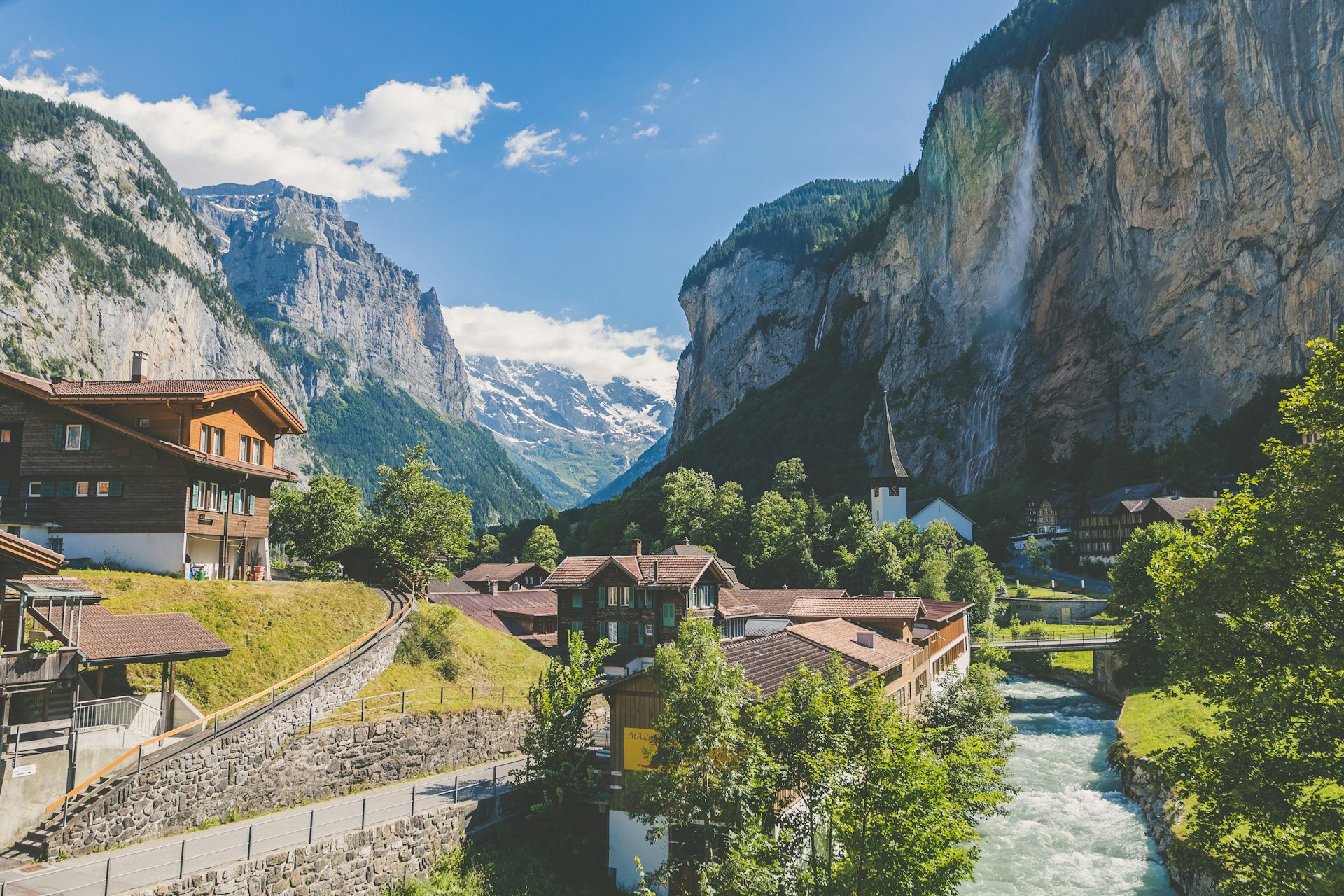
The morning alarm echoes through your apartment as another grey day begins. You're scrolling through endless expense reports, calculating how much of your salary disappears to taxes, rent, and the relentless cost of living. Then you see it: a photo of Switzerland's iconic Alpine landscape - pristine mountains reflected in crystal-clear lakes, historic architecture, and a quality of life that seems almost mythical.
Something shifts in that moment. What if this could be more than just a vacation destination?
Switzerland has quietly become one of the world's most coveted relocation destinations, offering not just stunning scenery but genuine advantages for those seeking a better life. With its exceptional healthcare system, stable economy, and strategic position in the heart of Europe, Switzerland provides opportunities that extend far beyond its postcard beauty.
Whether you're a corporate executive considering a company transfer, a wealthy individual exploring tax optimization, a digital nomad seeking Alpine inspiration, or a family looking for world-class education and safety, Switzerland offers pathways that could transform your life. This comprehensive guide explores every angle - from the practical realities of visas and taxes to the emotional journey of building a new life in one of the world's most prosperous nations.
Corporate Relocation to Switzerland
For corporate professionals, Switzerland represents the pinnacle of business sophistication. Home to global giants like Nestlé, Roche, and Novartis, plus the financial powerhouse that is Zurich, Switzerland offers unparalleled opportunities for career advancement in finance, pharmaceuticals, technology, and multinational business.
"Moving to Switzerland was the best decision for my family's future. The business environment here is incredibly professional, and the work-life balance actually exists - something I never thought possible in finance." — Corporate Transfer Manager, Zurich
Corporate Visa Options
Corporate transfers to Switzerland typically utilize the L or B permit system. The L permit covers short-term assignments (up to 12 months), while the B permit serves longer-term corporate relocations with initial validity of up to five years.
📍 For US Citizens: FATCA compliance is mandatory - you'll need to report Swiss accounts to the IRS and potentially face FBAR requirements for accounts over $10,000.
📍 For EU Citizens: You benefit from freedom of movement agreements, making the visa process significantly simpler with simplified registration procedures.
Corporate Tax Benefits
Switzerland's federal corporate tax system offers significant advantages. The federal corporate tax rate is 8.5%, though total rates including cantonal and municipal taxes typically range from 11% to 24%. Many corporations benefit from holding company privileges and participation exemptions that can dramatically reduce effective tax rates.
For executives, personal income tax rates vary significantly by canton. Zurich's top rate reaches approximately 40%, while tax-friendly cantons like Zug offer rates as low as 22% for high earners. The strategic choice of canton can save hundreds of thousands annually in taxes.
Cost of Living for Corporate Executives
Executive housing in prime locations commands premium prices. In Zurich, luxury apartments suitable for corporate relocations range from $4,500-8,000 / £3,540-6,300 / €4,140-7,360 / CHF 4,000-7,200 monthly. Geneva shows similar patterns, while suburban areas offer more value without sacrificing quality.
Corporate packages typically include relocation allowances, housing subsidies, and international schooling costs. Many companies provide $50,000-100,000 / £39,400-78,700 / €46,000-92,000 / CHF 45,000-90,000 relocation packages to offset initial settling costs and Swiss price premiums.
Trust and Asset Protection in Switzerland
Switzerland's reputation as a global center for wealth management extends far beyond secret bank accounts of Hollywood films. Today's Switzerland offers sophisticated, compliant structures for legitimate asset protection, estate planning, and wealth preservation that align with international transparency standards while maintaining exceptional privacy protections.
The Swiss trust and foundation landscape has evolved dramatically since the implementation of Common Reporting Standard (CRS) and enhanced due diligence requirements. This evolution has actually strengthened Switzerland's position, as clients now receive institutional-grade compliance alongside world-class wealth management expertise.
Swiss Foundation Structures
Swiss foundations offer unique advantages for family wealth planning and charitable purposes. Unlike trusts in common law jurisdictions, Swiss foundations are independent legal entities with strong asset protection characteristics under civil law. The minimum capital requirement is CHF 50,000 ($55,000 / £43,300 / €50,600), making them accessible for substantial but not ultra-high-net-worth families.
📍 For US Citizens: Swiss structures must comply with PFIC (Passive Foreign Investment Company) rules and may trigger complex US tax obligations. Professional tax planning is essential to avoid punitive taxation.
Banking and Investment Management
Swiss private banking remains unparalleled in sophistication and service quality. Major banks like UBS and Credit Suisse (now part of UBS) offer comprehensive wealth management starting from CHF 1 million ($1.1M / £860K / €1.01M), while boutique private banks serve clients from CHF 5 million ($5.5M / £4.3M / €5.05M).
Recent developments, including UBS's potential consideration of relocating headquarters to the US, highlight the evolving landscape but don't diminish Switzerland's fundamental strengths in wealth management infrastructure and expertise.
📍 For Indian Nationals: Swiss banking relationships can help with NRI compliance and provide sophisticated investment platforms not available in domestic Indian markets, though RBI's LRS limits of $250,000 annually must be considered.
Estate Planning and Succession
Swiss succession law provides unique advantages for international families. The system allows significant testamentary freedom while respecting forced heirship rules from other jurisdictions. Swiss inheritance tax is levied at cantonal level, with some cantons offering complete exemptions for spouses and direct descendants.
Wealth Optimization and Golden Visa Opportunities
Switzerland's approach to attracting wealthy individuals centers not on real estate investment but on genuine economic contribution and tax commitment. The Swiss Golden Visa system, while selective and demanding, offers unparalleled benefits for those who qualify and commit to making Switzerland their primary residence.
"The lump sum taxation arrangement transformed our family's global tax efficiency. Switzerland isn't just about bank secrecy - it's about sophisticated, compliant tax planning that works in the modern world." — Family Office Principal, Geneva
Swiss Golden Visa Programs
According to the Swiss Secretariat for Migration, just 496 people currently hold a Swiss Golden Visa. Two primary pathways exist: the Lump Sum Taxation Scheme and the Swiss Business Investor Program.
The Lump Sum Taxation route requires annual tax commitments ranging from CHF 250,000 to CHF 1 million ($303,000-1.21M / £239,000-954,000 / €289,000-1.16M), based on Swiss living expenses rather than global income. Applicants must reside in Switzerland at least 180 days annually and cannot engage in employment.
The Business Investor Program requires CHF 1 million minimum annual investment ($1.21M / £954,000 / €1.16M) in Swiss companies, typically through new enterprise creation or substantial investment in existing businesses that create local employment.
Cantonal Tax Variations
Switzerland's competitive federalism creates dramatic tax differences between cantons. Zug offers Switzerland's most attractive tax environment, with total income tax rates for wealthy individuals potentially as low as 22%, while Geneva and Zurich reach 40%+ for high earners.
Tax Rate Comparison by Canton (High Earners):
- Zug: ~22% total rate (most favorable)
- Schwyz: ~25% total rate
- Nidwalden: ~26% total rate
- Zurich: ~40% total rate
- Geneva: ~42% total rate (highest)
Investment and Banking Infrastructure
Switzerland's investment management industry manages over CHF 2.3 trillion ($2.8T / £2.2T / €2.7T) in assets. The country hosts sophisticated fund administration, family office services, and alternative investment platforms unmatched globally in terms of expertise and regulatory sophistication.
Critical Note: The Swiss Golden Visa requires genuine economic substance and long-term commitment. Unlike real estate-based programs, this isn't a "passive" investment but requires establishing genuine ties to Switzerland.
Property Investment Rules
Foreign property ownership in Switzerland operates under the Lex Koller restrictions. Non-residents can only purchase holiday homes in designated tourist areas, with annual quotas limiting supply. Residents with B or C permits face fewer restrictions but still encounter cantonal limitations on property types and locations.
Retirement in Switzerland
Retirement in Switzerland represents the apex of quality of life for those who can afford it. With the world's second-strongest passport, exceptional healthcare, pristine environment, and political stability, Switzerland offers retirees a sanctuary of comfort and security unmatched anywhere else.
The Swiss approach to retirement immigration emphasizes financial self-sufficiency and genuine integration rather than simple investment thresholds. This creates communities of engaged, financially secure retirees who contribute to rather than burden local services.
Retirement Visa Requirements
Switzerland doesn't offer a specific "retirement visa," but wealthy retirees typically qualify through the lump sum taxation arrangement or sufficient passive income demonstration. Applicants must prove annual income of at least CHF 300,000 ($365,000 / £287,000 / €347,000) or substantial assets generating equivalent returns.
📍 For UK Citizens: Your UK State Pension continues to be uprated annually when living in Switzerland, unlike in many other countries where it's frozen.
Healthcare Excellence
Switzerland's healthcare system consistently ranks among the world's best. The World Health Organization ranks Switzerland's healthcare system 20th globally, with exceptional outcomes in cancer treatment, cardiac care, and geriatric medicine.
Healthcare insurance is mandatory for all residents, with premiums averaging CHF 4,800 annually ($5,840 / £4,590 / €5,560) for comprehensive coverage. High-deductible plans reduce premiums, while premium plans offer private room access and choice of specialists without referrals.
📍 For US Citizens: Medicare doesn't provide coverage abroad, but Swiss healthcare quality often exceeds US standards. Many American retirees find Swiss healthcare both superior and, considering outcomes, surprisingly cost-effective.
Cost of Living for Retirees
Comfortable retirement in Switzerland requires substantial financial resources. A couple should budget CHF 8,000-12,000 monthly ($9,730-14,600 / £7,640-11,460 / €9,250-13,880) for a good quality of life including housing, healthcare, dining, and leisure activities.
Housing represents the largest expense, with retirement-suitable apartments ranging from CHF 2,500-5,000 monthly ($3,040-6,080 / £2,390-4,780 / €2,890-5,780) depending on location and amenities. Luxury senior living communities offer comprehensive services but command CHF 8,000-15,000 monthly ($9,730-18,230 / £7,640-14,320 / €9,250-17,350) per person.
Best Regions for Retirees
Lake Geneva Region: Offers cosmopolitan culture, excellent healthcare, and stunning lake views. Montreux and Vevey provide sophisticated retirement communities with cultural amenities and mild climate.
Zurich Area: Maximum convenience and international community, though at premium cost. Excellent public transport and world-class medical facilities.
Ticino: Italian-speaking region offers Mediterranean climate and culture within Switzerland. Popular with Italian and German retirees seeking warmer weather.
Digital Nomads and Remote Work in Switzerland
Switzerland presents a unique proposition for digital nomads - exceptionally high costs balanced by unparalleled quality of life, infrastructure, and networking opportunities. While not traditionally a nomad destination due to expense, Switzerland attracts high-earning remote professionals who prioritize quality over economy.
"I'm in Switzerland. My wife and I have a job, 2 kids and we've been here 3 years. No drama, doing ok and just living life. After the kids went to bed my wife turns to me and said.... Wow I guess we actually made it work here." — u/palbuddy1234, r/expats
Work Visa Options for Remote Workers
Switzerland doesn't offer a dedicated digital nomad visa, but several pathways exist for remote workers. B permits for remote workers require either employment with a Swiss company allowing remote work or sufficient independent income to qualify as self-employed.
The Tourist Route: Many nomads utilize Switzerland's 90-day Schengen allowance, though this precludes establishing residency or accessing certain services. For longer stays, the investment or lump sum taxation routes become necessary, requiring substantial financial resources.
📍 For Southeast Asian Citizens: Swiss tourist visas for Philippine, Indonesian, and Vietnamese passport holders require comprehensive documentation and demonstrated financial resources of €100+ per day.
Internet and Infrastructure
Switzerland boasts world-class internet infrastructure. Average internet speeds exceed 100 Mbps in urban areas, with fiber connections reaching 1 Gbps. Mobile coverage includes comprehensive 5G networks across urban and rural areas.
Coworking spaces in major cities charge CHF 300-600 monthly ($365-730 / £287-573 / €347-693) for dedicated desks, with day passes at CHF 35-50 ($43-61 / £34-48 / €41-58). Premium locations offer stunning Alpine views alongside professional facilities.
Cost Reality for Digital Nomads
Digital nomads should budget CHF 4,000-6,000 monthly ($4,870-7,300 / £3,820-5,730 / €4,630-6,940) for comfortable living including accommodation, meals, transport, and workspace. This puts Switzerland firmly in the premium nomad category, suitable for high-earning professionals rather than budget travelers.
Accommodation: Furnished studio apartments start at CHF 1,500-2,500 monthly ($1,825-3,040 / £1,430-2,390 / €1,735-2,890), while co-living spaces targeting professionals range from CHF 1,800-3,000 ($2,190-3,650 / £1,720-2,870 / €2,080-3,470).
Lifestyle Migration to Switzerland
Beyond financial advantages and career opportunities, many choose Switzerland for pure lifestyle enhancement - the Alpine air, pristine environment, cultural richness, and that indefinable Swiss quality of life that consistently ranks the country among the world's happiest nations.
Switzerland offers a unique European lifestyle that balances urban sophistication with natural beauty, traditional culture with innovation, and efficiency with leisure. The Swiss concept of Gemütlichkeit - roughly translated as comfort, coziness, and well-being - permeates daily life in ways that surprise newcomers.
Quality of Life Metrics
Switzerland consistently leads international quality of life rankings. The UN Human Development Index places Switzerland in the top 5, while the World Happiness Report regularly ranks it among the top 10 happiest nations globally.
Environmental quality stands unmatched - Switzerland has some of Europe's cleanest air and water, with 83% of the population rating their environment as excellent. Public transport efficiency, low crime rates, and political stability create a living environment many describe as "effortlessly civilized."
Cultural Integration and Language
Switzerland's multilingual nature offers flexibility for newcomers, though local integration benefits from language learning. German (63% of population), French (23%), Italian (8%), and Romansh (0.5%) are official languages, with English proficiency high in urban areas.
Swiss culture values punctuality, precision, and respect for rules, but also emphasizes work-life balance and community involvement. Many expatriates report feeling welcomed once they demonstrate genuine interest in local customs and community participation.
📍 For Commonwealth Citizens: Switzerland recognizes many Commonwealth professional qualifications, and the cultural adjustment is often easier than expected due to shared values of fair play, environmental consciousness, and civic responsibility.
Outdoor Lifestyle and Recreation
Switzerland's outdoor recreation opportunities are legendary. With over 65,000 kilometers of marked hiking trails, world-class skiing in over 200 resorts, and pristine lakes for swimming and boating, outdoor enthusiasts find endless possibilities.
The Swiss Alpine passes open stunning mountain routes for driving, cycling, and motorcycling, while the extensive public transport network makes outdoor areas accessible without private vehicles. Many expatriates report that outdoor recreation becomes central to their Swiss lifestyle in ways impossible in more urbanized countries.
Social and Community Life
Swiss community life revolves around local associations, sports clubs, and cultural organizations. From traditional folk festivals to cutting-edge arts festivals, community participation offers pathways to integration and friendship beyond expatriate circles.
Many municipalities offer integration courses covering language, culture, and civic responsibilities. These programs facilitate not just legal integration but social acceptance and community involvement that transforms expatriates into genuine Swiss residents.
Starting Fresh in Switzerland
Sometimes life requires a complete reset - a chance to step away from past disappointments, failed ventures, or simply the accumulated weight of routine. Switzerland, with its pristine slate and merit-based opportunities, offers the possibility of genuine new beginnings for those willing to meet its demanding standards.
Unlike destinations that promise easy transformation, Switzerland demands excellence but rewards it generously. The country's high barriers to entry filter for serious, committed individuals who contribute meaningfully to Swiss society rather than simply seeking geographical arbitrage.
Career Reinvention Opportunities
Switzerland's economy offers unique opportunities for career pivots, particularly in high-value sectors. The country hosts global headquarters of multinationals, cutting-edge research institutions, and thriving startup ecosystems in fintech, biotech, and clean technology.
Switzerland ranks 8th globally in startup ecosystem quality, with strong government support for innovation and entrepreneurship. The country's stable regulatory environment and access to capital make it attractive for those launching new ventures or transitioning from corporate careers to entrepreneurship.
Real Success Story: Many international professionals report that Switzerland's demanding but fair business culture rewarded their talents in ways their home countries didn't, particularly in finance, pharmaceuticals, and technology sectors.
Financial Fresh Start
Switzerland's financial infrastructure offers sophisticated tools for those rebuilding wealth or optimizing existing assets. The country's banking privacy (within legal compliance frameworks) and investment expertise help individuals restructure finances away from past complications or inefficient structures.
For entrepreneurs and business owners, Swiss incorporation offers credibility, political stability, and access to EU markets that can accelerate business recovery or expansion. The corporate tax rates of 11-24% (varying by canton) compare favorably to many other developed countries while providing superior infrastructure and talent access.
Educational and Professional Development
Switzerland hosts world-renowned institutions like ETH Zurich and EPFL, offering continuing education and professional development programs. Many adults use Swiss education as a bridge to career transformation, particularly in technology, finance, and international business.
The Swiss apprenticeship system, famous for producing skilled professionals, also offers pathways for adult career changers. These programs combine practical training with academic learning, providing internationally recognized qualifications in fields ranging from hospitality to precision manufacturing.
Psychological Benefits of Swiss Living
The Swiss environment offers psychological benefits that support personal transformation. The combination of natural beauty, social order, and cultural emphasis on precision and quality creates an atmosphere conducive to personal discipline and goal achievement.
Many expatriates report that Switzerland's culture of continuous improvement and attention to detail helps them develop better personal habits and professional practices. The country's emphasis on work-life balance and outdoor recreation supports mental health and personal reflection necessary for meaningful life changes.
Family Migration to Switzerland
For families seeking the ultimate in safety, education, and quality of life, Switzerland represents an uncompromising choice. With the world's safest cities, exceptional educational systems, and a child-friendly culture that prioritizes family welfare, Switzerland offers children opportunities to thrive in ways few other countries can match.
Swiss family life embodies values many parents worldwide seek - respect for nature, emphasis on education, community involvement, and that rare combination of structure with genuine childhood freedom that produces confident, capable young adults.
World-Class Education System
Switzerland's education system consistently ranks among the world's best. PISA scores place Swiss students in the top 10 globally in reading, mathematics, and science, while the country's dual education system seamlessly integrates academic learning with practical skills.
International schools serve expatriate families with curricula in English, offering IB, British, American, and other international programs. Annual fees range from CHF 20,000-35,000 ($24,300-42,600 / £19,100-33,400 / €23,100-40,500) per child, with premium institutions commanding higher fees but offering unparalleled facilities and university placement rates.
Education Advantage: Swiss education emphasizes multilingual development from early ages. Children typically graduate fluent in 2-3 languages, with exceptional preparation for global university admission and international careers.
Family Safety and Security
Switzerland consistently ranks as one of the world's safest countries for families. The Global Peace Index ranks Switzerland 7th globally, while violent crime rates remain among the lowest worldwide. Children routinely walk to school alone and play in parks without supervision in ways unthinkable in many other countries.
Swiss cities like Zurich and Basel regularly appear in top 10 global liveability rankings, with excellent public transport, clean streets, and comprehensive emergency services that create secure environments for family life.
Family-Friendly Neighborhoods
Zurich Suburbs: Küsnacht, Zollikon, and Herrliberg offer premium family environments with excellent schools, lake access, and strong international communities. Housing costs are high but schools and amenities are world-class.
Geneva Area: Cologny, Vandoeuvres, and surrounding communes provide French-speaking family environments with international school access and proximity to UN/WHO international communities.
Central Switzerland: Zug and surrounding areas offer lower taxes, excellent schools, and stunning natural environments while maintaining easy access to Zurich's business opportunities.
Healthcare for Families
Swiss healthcare for families is comprehensive and child-focused. Child mortality rates are among the world's lowest, while pediatric care standards exceed most international benchmarks.
Family health insurance typically costs CHF 1,200-2,000 monthly ($1,460-2,430 / £1,150-1,910 / €1,390-2,310) for comprehensive coverage including children, dental, and preventive care. The investment ensures access to world-class medical facilities and specialists without waiting periods.
📍 For Middle Eastern Expatriate Families: Switzerland's large international community and religious tolerance make it welcoming for diverse families, with Islamic schools, halal dining, and multi-cultural neighborhoods particularly around Geneva and Zurich.
Cost of Family Living
Comfortable family life in Switzerland requires substantial financial resources. A family of four should budget CHF 12,000-18,000 monthly ($14,600-21,900 / £11,460-17,190 / €13,880-20,820) including housing, schools, healthcare, and lifestyle expenses.
Family housing in desirable areas ranges from CHF 4,000-8,000 monthly ($4,870-9,730 / £3,820-7,640 / €4,630-9,250) for suitable 4-5 bedroom accommodations. While expensive, Swiss housing standards include features like underground parking, excellent insulation, and access to recreational facilities that justify premium pricing.
Practical Settling-In Guide
Where to Live: Top Regions
- Zurich: Global business hub, highest costs, excellent amenities
- Geneva: International organizations, French culture, lake lifestyle
- Basel: Pharmaceutical industry, cultural richness, lower costs
- Zug: Tax haven, tech startups, family-friendly
- Lausanne: University town, Olympic headquarters, vibrant culture
- Bern: Capital city, government jobs, historic charm
Essential First Steps
- Register residence within 14 days at local municipality
- Obtain health insurance within 3 months
- Open Swiss bank account (UBS, Credit Suisse, Raiffeisen)
- Apply for B permit if staying longer than 90 days
- Register for social security (AHV/AVS)
- Convert driving license within 12 months
Pet Relocation to Switzerland
Switzerland requires EU Pet Passport or equivalent documentation for dogs and cats. Pets need microchipping, rabies vaccination (minimum 21 days old), and health certificate from accredited veterinarian. No quarantine required from EU countries with proper documentation.
Professional Qualification Recognition
Foreign qualifications undergo evaluation by SERI (State Secretariat for Education, Research and Innovation). Medical, legal, and engineering professions require formal recognition processes that can take 3-6 months and cost CHF 550-800.
Utilities and Internet Setup
Major providers include Swisscom, UPC, and Sunrise for internet/mobile services. Monthly internet costs CHF 50-80 for high-speed fiber. Mobile plans with substantial data cost CHF 40-70 monthly. Most utilities can be arranged online with English-language support available.
Frequently Asked Questions
Can I get Swiss citizenship through investment?
Yes, through the lump sum taxation scheme or business investment program, but it requires 10-12 years of residence and genuine integration, including language proficiency and community involvement.
How much money do I need to move to Switzerland?
For comfortable living: individuals need CHF 80,000+ annually, families need CHF 150,000+. For investment visas: CHF 250,000-1,000,000 annual lump sum tax or CHF 1,000,000 business investment minimum.
Do I need to speak German/French to live in Switzerland?
English works in major cities and international businesses, but local language skills dramatically improve integration prospects. German is most useful (spoken by 65% of population), followed by French (18%).
What are Switzerland's visa requirements for Indians?
Indians need Schengen visas for short visits. Updated 2025 rules require strict adherence to official document checklists with no additional papers accepted.
Can foreigners buy property in Switzerland?
Non-residents can only buy holiday homes in designated tourist zones with annual quotas. Residents with B/C permits have broader property rights but still face some restrictions depending on canton.
How does Swiss healthcare work for expatriates?
Mandatory insurance system with private providers. Choose from basic (CHF 300-400/month) to premium (CHF 600-800/month) plans. Coverage is comprehensive but dental and alternative medicine often require supplementary insurance.